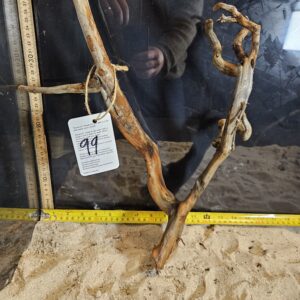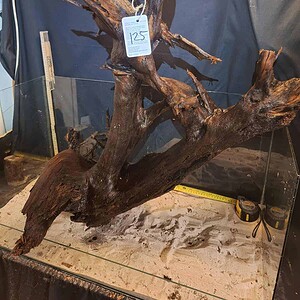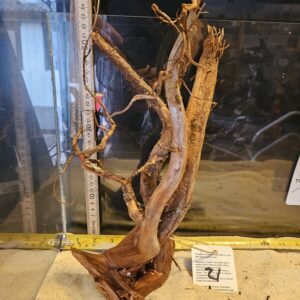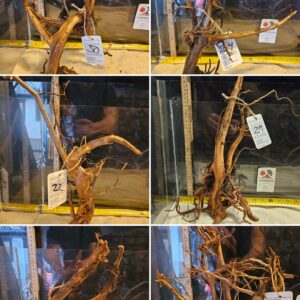





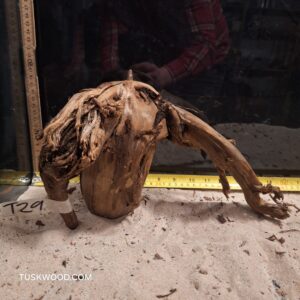


A unique piece Scandinavian bogwood, naturally preserved in peat over hundreds to thousands of years. This is a real eye-catcher and works perfectly as aquarium root in aquascape in aquarium, whether you're creating a nature-inspired ADA layout or a South American biotope
The product in the pictures is exactly the root you buy.
The pictures are taken in an aquarium with standard dimensions P90, 90x45x45
Advantages of Tuskwood
-
Genuine mineralized bogwood / moss wood
-
Long life span
-
Non-toxic and safe for fish and shrimp
-
No biofilm or slime
-
Extra good for soft water, also works well with hard water.
-
Naturally dark color tones (becomes evenly dark brown under water)
-
Each copy is unique
Unlike regular spiderwood, manzanita, mangrove or Malaysian driftwood, Tuskwood comes from Europe and has formed naturally in Nordic peatlands. The mineralization makes the wood durable, and naturally produces dark colours and shapes reminiscent of old riverbank or flooded forest roots.
Tuskwood releases very slowly natural tannins that support fish health. However, the impact on the color of the water is minimal, usually not noticeable.
✔ stable and mild tannin release
✔ positive for the well-being of fish
✔ promotes natural behavior
Much of the wood sold for aquascaping comes from tropical forests in Asia and is shipped halfway around the world.
Tuskwood is a Nordic natural material, collected locally as a by-product of other natural uses, making it a more sustainable choice without tropical deforestation and undignified working conditions, instead minimizing transportation and promoting local economy and jobs.
Perfect for:
-
plant aquarium
-
ADA-style nature aquarium
-
biotopes
-
blackwater
-
show aquarium
- aquascaping
Aquascaping tips
Place as an eye-catcher and supplement with stones, sand or small branches to mimic river banks or flooded forest.
Preparation of the root before use Before placing the Tuskwood in the aquarium, we recommend rinsing and brushing the root with water and a brush (e.g. a dish brush) to remove loose organic matter from the peat moss. Tuskwood is naturally liquid when it is completely dry and needs to absorb water before it sinks on its own. There are two common methods:
1 Water lowering
Place the root in a bucket or tub filled with water. Place a stone on top to keep it below the surface.
Normally it takes 1-2 weeks before the root is fully waterlogged and sinks on its own. When the root sinks by itself, it is ready for the aquarium.
2 Installation in a dry aquarium (aquascaping method)
If you are building your layout in a dry aquarium, you can attach the root directly to rocks or to the glass with aquarium silicone or superglue (cyanoacrylate). This will keep it stable even when the water is later refilled. After cycling and changing the water, it is ready for fish and shrimp.
About boiling roots
We advise against boiling tuskwood as it is not necessary.
If you still want to disinfect the root, you can pour boiling water over it or wash it with a disinfectant.
In the worst case, boiling can negatively affect the strength and chemistry of the root.
Water changes
Tuskwood is one of the safest and most chemically stable types of wood you can get for your aquarium with an undoubtedly positive effect on the aquatic environment.
Nevertheless, the water in which the root is initially soaked should always be discarded. This is done with all aquarium roots, regardless of origin, as a precautionary measure as a wooden root can always have some impact on the water chemistry of the initial wetting.