








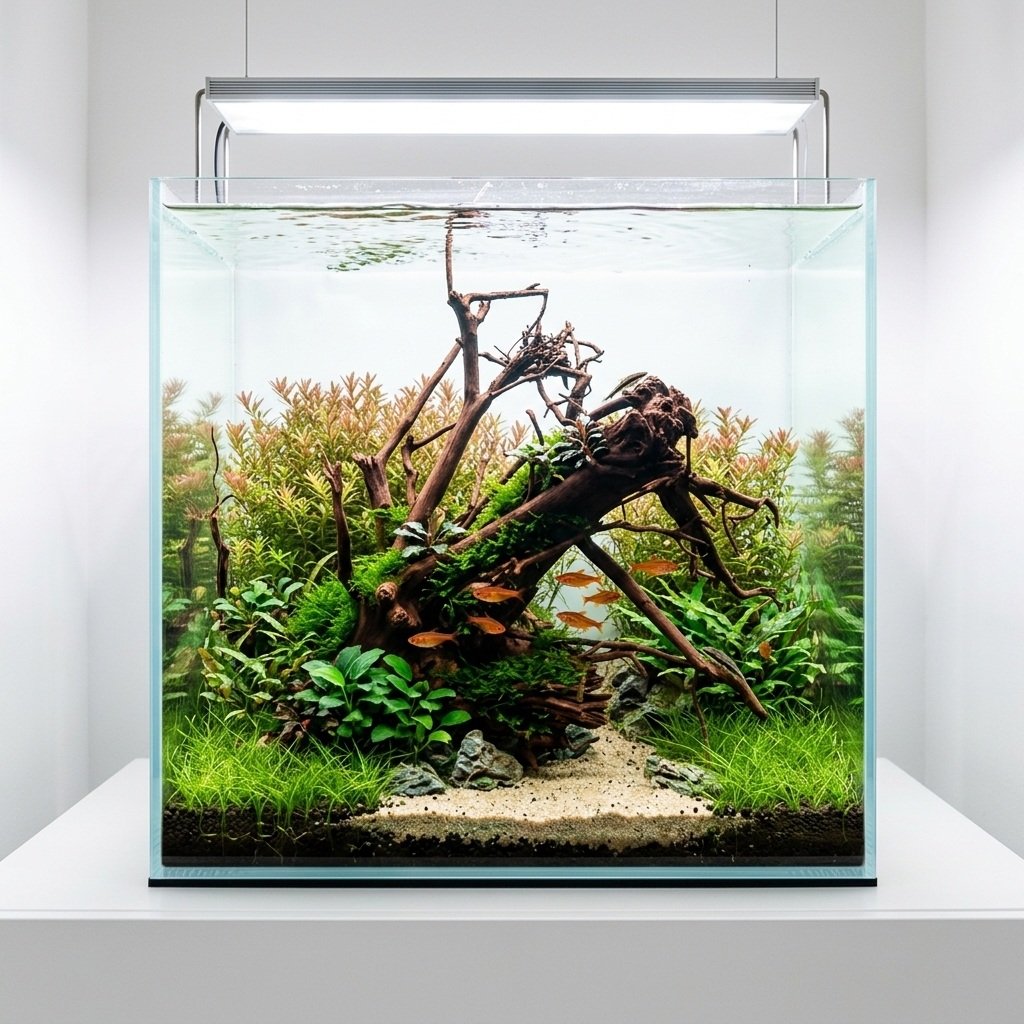
WYSIWYG roots with the right scale
Aquarium roots for small aquariums
Small aquariums can look amazing with the right root. Often all you need is a clear shape, some moss or plants, and a root that actually fits the aquarium rather than just being “just right”.
Small aquariums are perfect for a really good root
The beauty of a smaller aquarium is that you don't need much to make an impact. A single root can create the whole feel. It can provide height, hiding places, mounts for plants and a natural direction in the scape.
A clear master mould
Choose a root that immediately gives you an idea. It doesn't have to be big. It just needs to have a shape that does something for the aquarium.
Some air around the root
Openings, gaps and branches make the aquarium feel bigger. They also make it easier to place plants and leave room for fish and shrimp.
A direction in the scape
A root that leans, points upwards or looks in one direction often does more than a root that just lies flat.
Simple mould can be at least as strong
There don't have to be lots of branches. In a small aquarium, a simple, more upright root can become like a small skyscraper or rock. Perfect to attach Anubias, Bucephalandra, Java fern or moss to.
Several small simple roots can also look very nice together. Think small stems, a small forest, or roots that follow rocks and substrate along the bottom. It can be more natural than trying to squeeze in a big dramatic root.
If you want a lot of moss or plants with small lobed leaves, the plants themselves will create many patterns and directions. A simpler root can often be best. It gives weight, direction and stability without making everything feel too messy.
If you want to leave more open water instead, a more branched aquarium root be the right choice. Then the root will provide more of the life, movement and detail in the aquarium.
The important thing is not whether the root is branched or simple. What matters is that it gives the right feel to your aquarium.
Why WYSIWYG is particularly useful here
When your aquarium is small, you want to know what you're getting. At Tuskwood you buy exactly the root in the picture. So you can look at the shape, angle, height and small details before you decide.
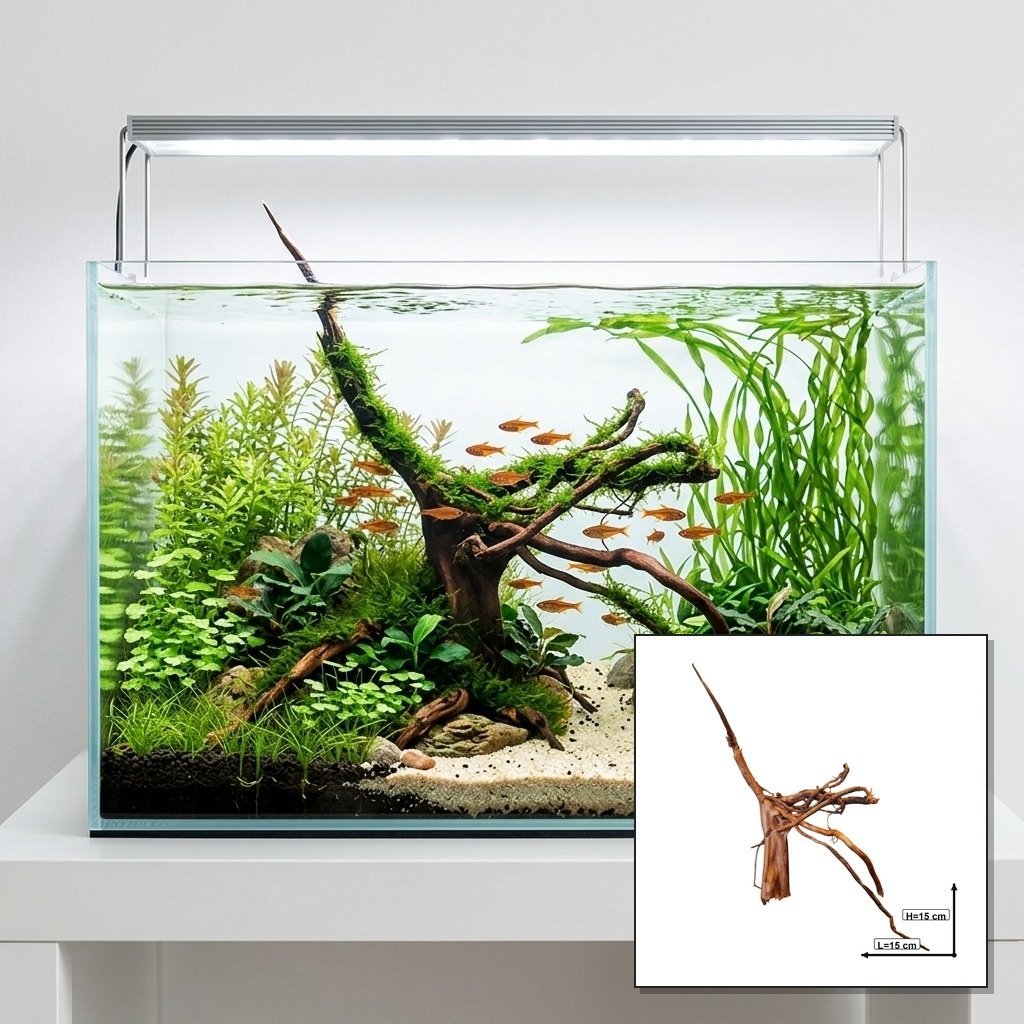
Aquarium roots in stock for small aquariums
Here you will find roots that can be particularly suitable for smaller aquariums. Start with the smallest roots, but also look at the shape: sometimes a slightly larger, airy root is easier to get nice than a smaller root that is very compact.
Selected roots suitable for aquariums under 40 cm
Small WYSIWYG roots that fit well in nano aquariums, shrimp aquariums and small plant aquariums.
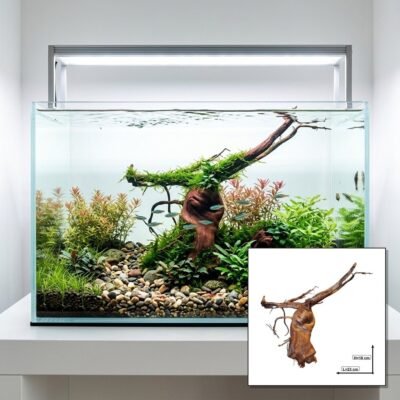
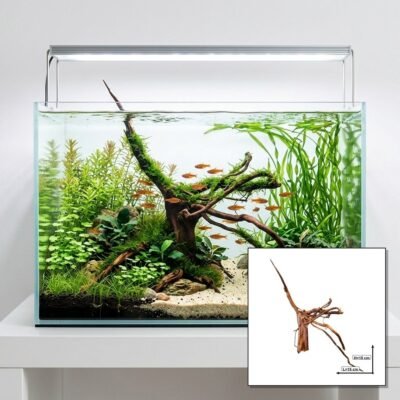
Slightly larger eye-catchers for small to medium-sized aquariums
If the aquarium is closer to 40-60cm, or you want a clearer main root, the next size group may be just right. Just choose a shape that still leaves air in the scape.
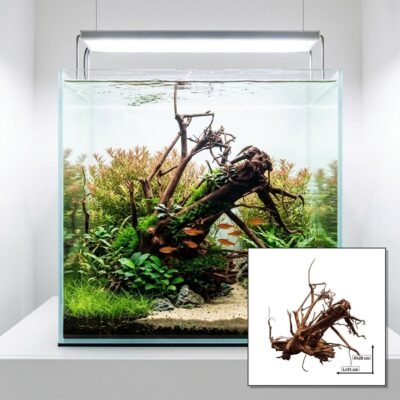
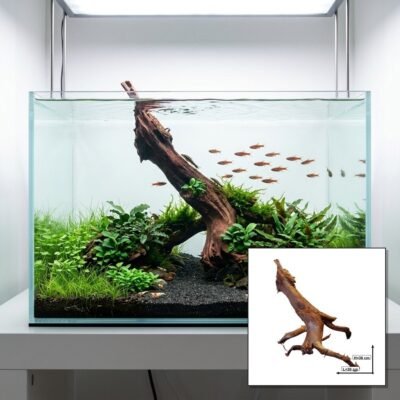
Rootsets when you want to build yourself
A root kit allows you to experiment. You can use all the parts, just one part or some of them, and save the rest for another layout.
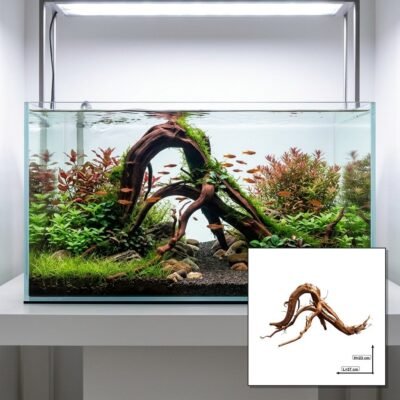
Go with the flow
The measurements are there to support you, but they don't have to determine everything. If you see a root and find it exciting, interesting or just nice to look at, then you are often close to the right choice.
It doesn't have to be exact from the start. Plants, stones and substrates can soften the shape, hide an edge or bring out the best in the root. Start with something you like and the rest will be much easier.
In a small aquarium, one good detail can go a long way. A root that makes you curious is almost always easier to build something nice around than a root that just happens to be the right size.
You can also customise the root
If a root is almost right, it may be enough to shorten a branch or a shoot. Saw thicker parts outside the aquarium. Thinner, dry sections can often be cut with secateurs.
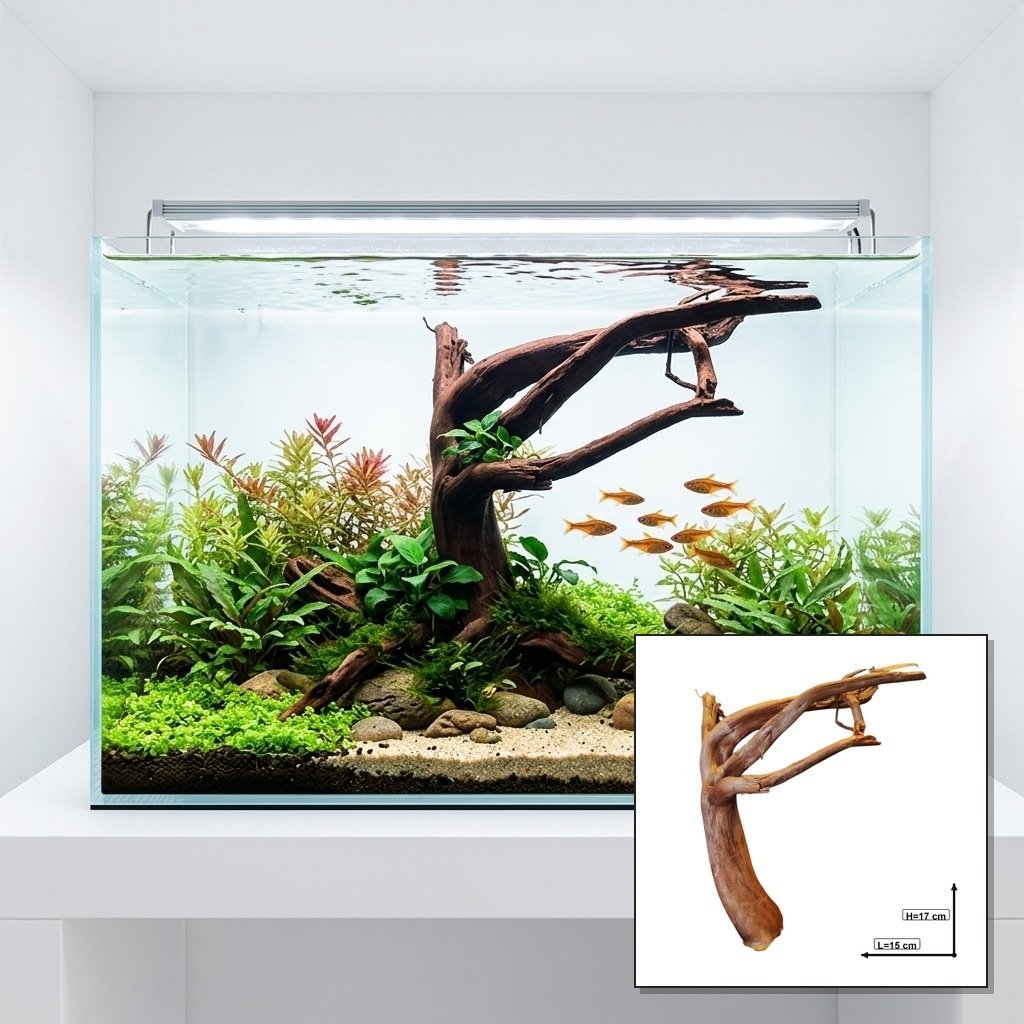
You may change your mind
An aquarium evolves. You can twist the root, move the stones, let the moss take over an edge or use fewer parts than you originally intended.
The most important thing is that you like the basic shape. Then you have something good to build on.
Frequently asked questions about aquarium roots for small aquariums
What size of root fits in a nano aquarium?
It depends on the shape. A small, compact root can feel big, while an airy root can work despite being taller. Look at its height, width and how much free space it leaves.
Is a branched root best in small aquariums?
Not always. Branching roots can create depth and movement, but a simple non-branching root can be just as good if it becomes a clear central form. An upright root can become a small skyscraper for plants, and several small simple roots together can feel like a small forest.
Is the root set better than a single root?
In small aquariums, the root set can be very practical, as you can place the parts with more freedom. You don't have to use all the pieces straight away. If you choose a set, it may also be worth looking at sets that fit a size larger. This will give you more pieces to choose from when building your small aquarium.
Can I cut or shorten a root?
Yes, you can. If a root is almost right, you can sometimes shorten it yourself before putting it in the aquarium. Saw off thicker parts and use secateurs for thinner sections.
Do I need to prepare the root before putting it in the aquarium?
Rinse and brush the root with water before placing it in the aquarium, preferably with a clean dish brush, to remove loose material from the peat moss. If the root is completely dry, it may need to be saturated with water first, or held down with a stone or other weight until it sinks. We don't recommend boiling Tuskwood; let it water-saturate instead.