








Your Tuskwood root has been preserved in oxygen-poor Nordic bogs for hundreds - sometimes thousands - of years. During this time, the wood has been slowly impregnated with humus, mineralised and shaped by the forces of nature.
Each root carries a story of the struggle against cold, darkness and wet, of the place and the life that gave this particular root its unique characteristics and shapes. Tuskwood is an exclusive natural material, it deserves to be handled with the right care.
The good news: it's easy - once you know how.
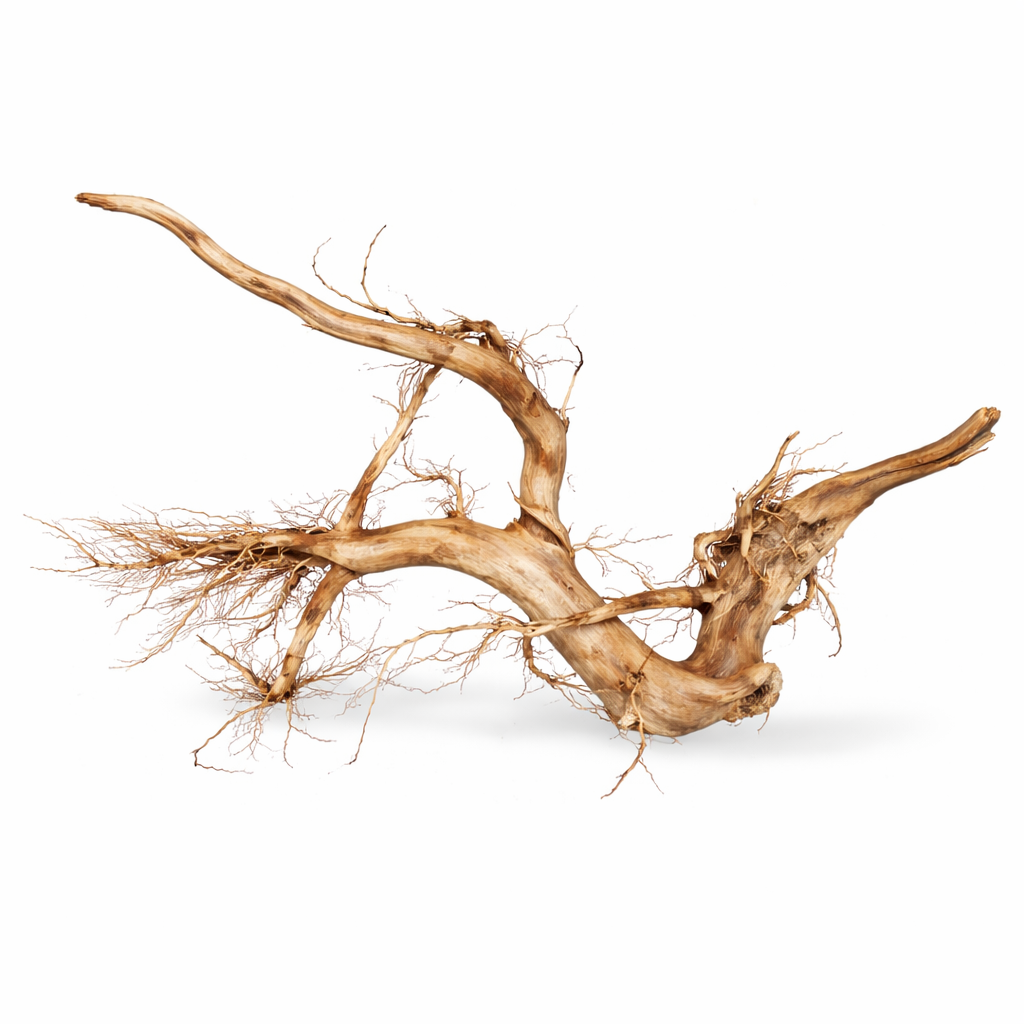
1. cleaning
The Tuskwood does not need to be cleaned to make it safe for use in the aquarium, but a general cleaning to remove any loose peat, bark fragments is welcome. The easiest way to do this is to use a dish brush and ordinary tap water, for example. It doesn't have to be completely clean, peat and bark are not dangerous to the aquatic environment, and the antimicrobial environment that has preserved the root for so many years prevents it from being a carrier of common parasites and infections.
Do not use chemicals, and do not boil the root. Boiling can negatively affect the root's natural antibacterial and rot-resistant properties and, in the worst case, chemicals can be absorbed by the root and then leach into the aquarium water.
2. soaking
Put the root in water with a weight of alternatively glued to stone or similar in an aquascape, in 1-2 weeks for thinner roots, and 3-4 weeks for thicker specimens. Change the water once a week. This allows the root to absorb water and reduce its buoyancy. It also means that any initial higher release of humus and antibacterial substances from the root will not affect the aquarium's wildlife.
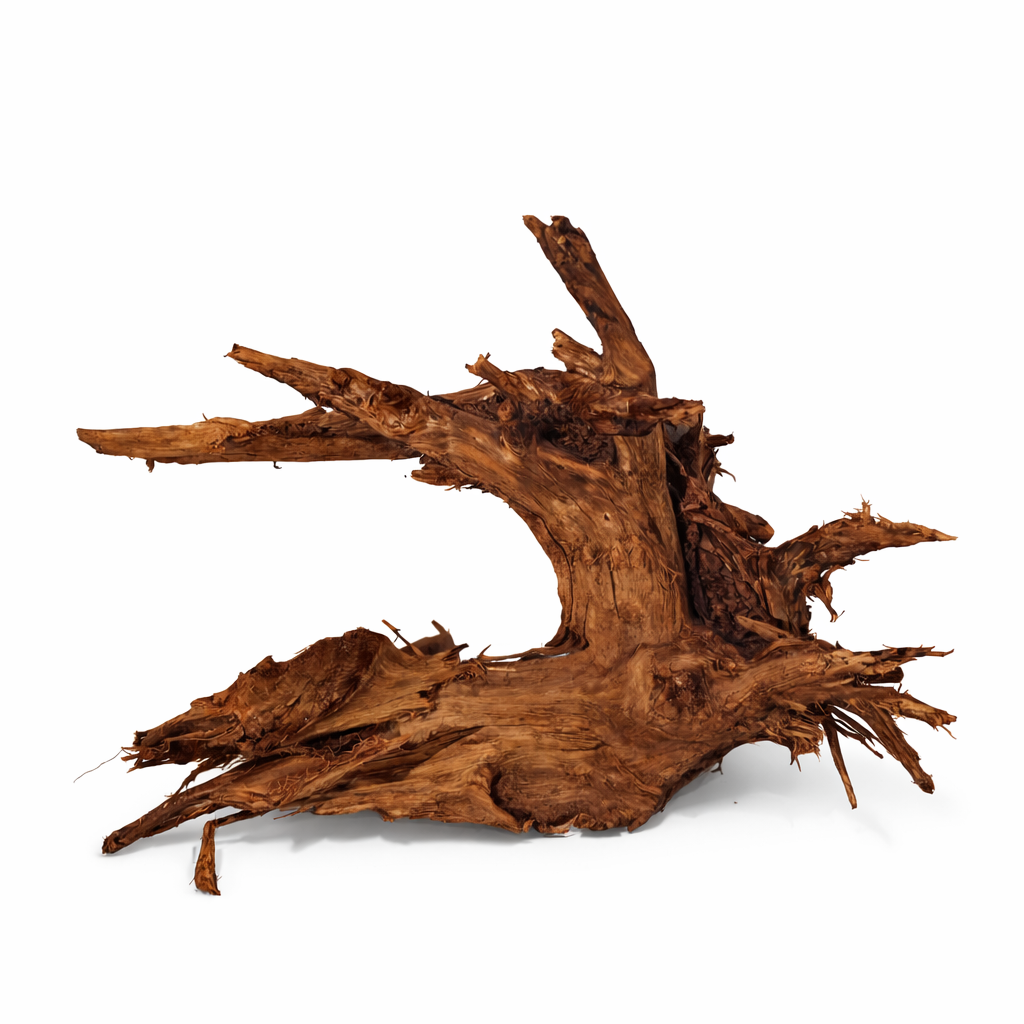
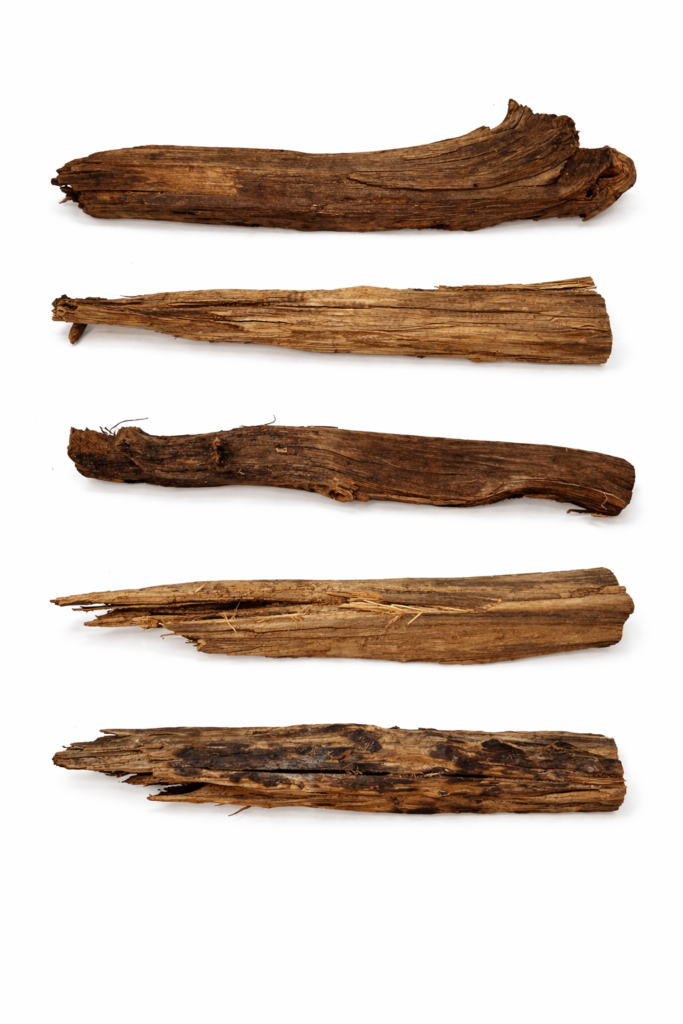
3. cutting
It is possible to cut thinner roots as you see fit. Roots over 5cm in diameter, and especially central parts of stumps, should be avoided. If you do want to cut such a section, you should take extra care with subsequent soaking and double the time to 6-8 weeks. This is because cutting a thicker section may cause the release of antibacterial substances, which are normally very favourable for the aquatic environment, to become too intense over a period of time.
Colour change
If the root has been sun-bleached, it may be greyer at first. In water, it will naturally revert to a deep brown to reddish brown colour within 2-3 weeks
Impact on water
Tuskwood after initial wetting has little if any noticeable impact on pH and generally does not provide any powerful blackwater effect. It is therefore ideally suited to both South American and African biotopes. It has a mild, natural, antimicrobial effect that is very favourable for fish, amphibians and shellfish.
biofilm
A major advantage of Tuskwood is that it normally completely avoids biofilm and slime formation. A thin grey film could occur, but if it does, it is very limited and short-lived, and goes away by itself in a short time.
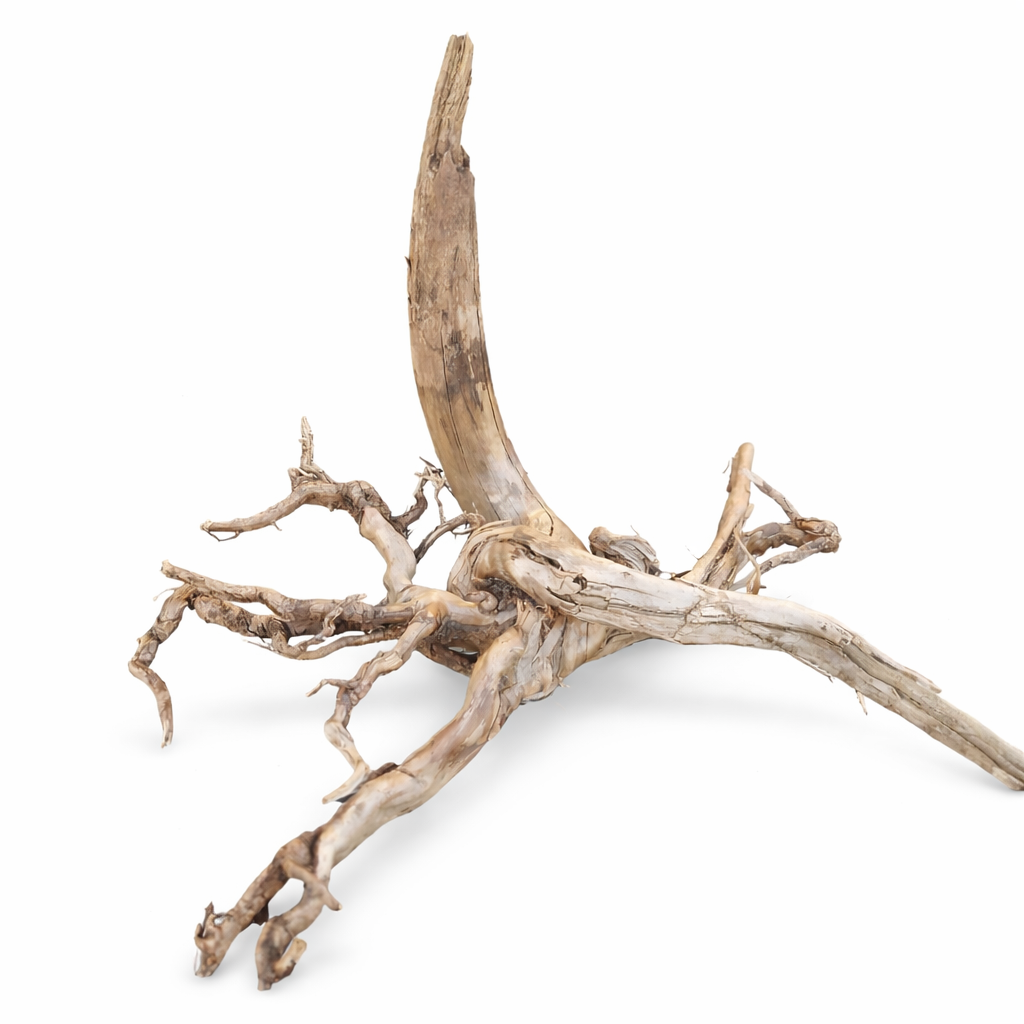
Mechanical damage to the root
Sometimes small, thin branches can break off during transport or handling. Don't worry. You can easily fix it with ordinary superglue (cyanoacrylate). Apply a small amount and press together. Ready in seconds (the same method is used professionally in aquascaping)
PART OF SOMETHING BIGGER
Tuskwood is not mass-produced.
It is locally sourced, shaped by nature and carefully selected for aquascaping.
A sustainable alternative to imported wood - from Europe, for Europe.
And perhaps most importantly:
Choosing Tuskwood, is not choosing just any root.
Tuskwood is, a root that has a story, a root that is more than just its appearance. A root with a history, and a positive effect on its entire environment.
Tuskwood - Roots, which touch.