


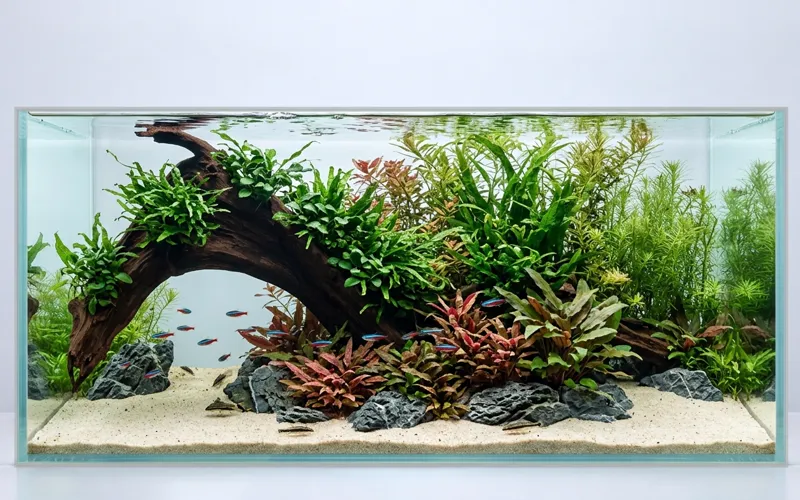
An aquarium does not have to end at the waterline.
One of the most striking things you can do in modern aquarium design is let roots continue above the water. The aquarium then becomes more than an underwater setting: it can suggest a small shoreline, riverbank or forest edge where land and water meet.
You often see this in shallow-tank layouts and open aquariums, or in designs aiming for a more natural, dramatic shape. A root breaking the waterline can make the whole scape feel more alive.
It is popular, modern and very striking when done well.
Why let roots rise above the water?
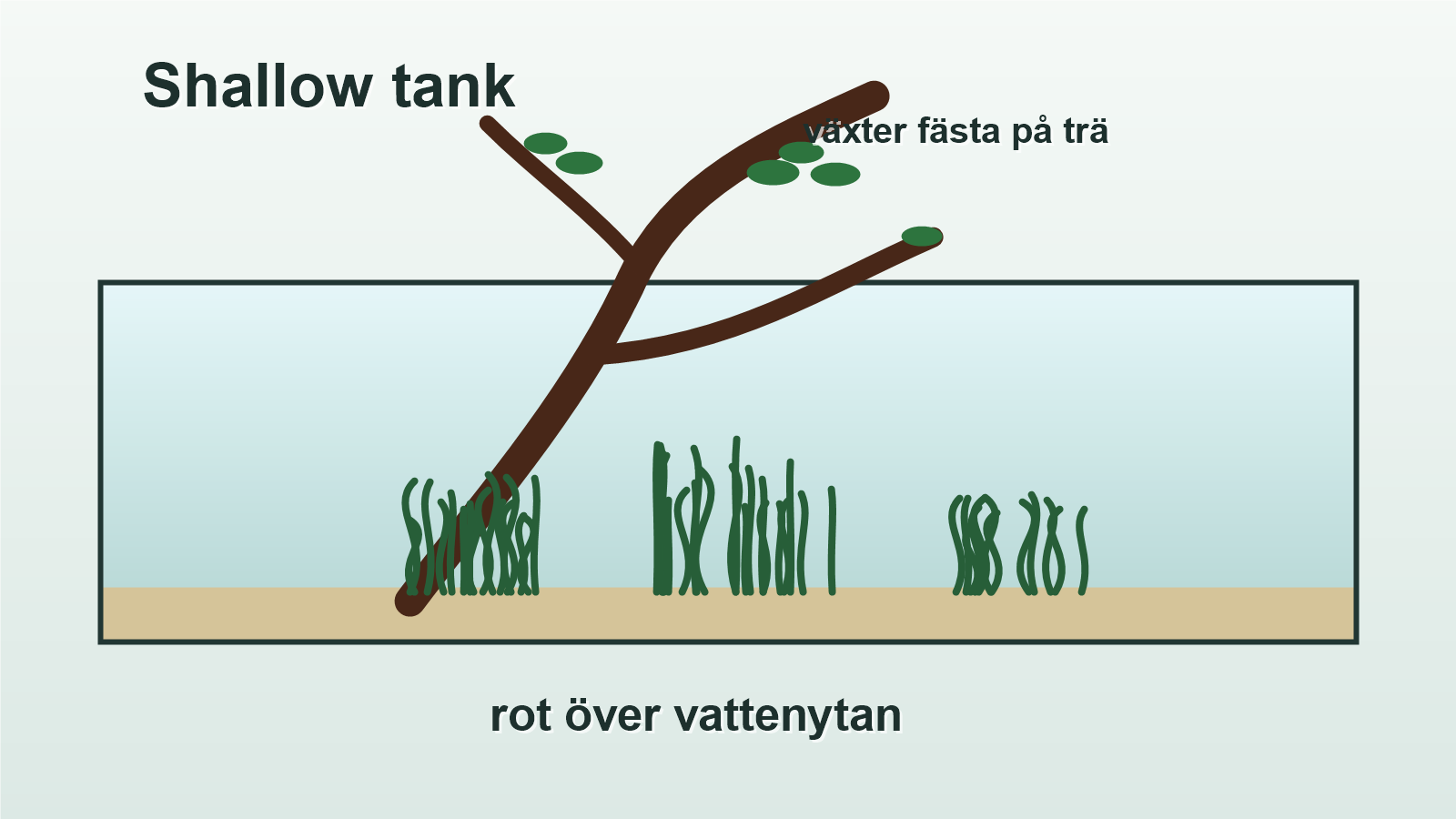
When a root continues up out of the water, it changes the feel of the whole aquarium.
It feels less like a box and more like a place. The eye can sense a world beyond the glass. The roots might resemble shoreline roots, tree roots, a fallen branch or part of a forest edge continuing down into the water.
This works especially well if you want to create:
- a shallow-tank feel
- a riverbank or shoreline
- roots descending from above
- a jungle feel
- paludarium-inspired design
- an open, modern aquascape
It also works well in aquariums where you want more height without filling the entire water volume with hardscape.
What is a shallow tank?
A shallow tank is a low aquarium with a relatively large base area and less water depth.
This type of aquarium suits roots that rise above the water particularly well, because its proportions already suggest a shoreline more than a typical tall aquarium.
You do not need a purpose-built shallow tank to use this idea. An ordinary open aquarium can also have a much stronger look when a root breaks the waterline naturally.
The key is for the design to look intentional. The root should not simply be too tall by accident; it should look at home both below and above the water.
Which roots work best?
Not every root suits this type of design.
A root intended to rise above the waterline often needs a clear shape. Ideally, it has a base that can sit securely underwater and a section that continues upwards or out to the side.
Tuskwood works very well here because many roots have natural shapes that are hard to find in more standardised aquarium wood.
Especially interesting are:
- L-shaped roots
- T-shaped roots
- roots with strong base and upward branch
- roots that can lie low but send some up above the surface
- roots that may lean against rocks or the rear window
- more branched roots which gives the impression of roots from above
L-shaped and T-shaped Tuskwood roots can be excellent for this type of design. They can create a natural transition from the bottom to the water surface, or give the feeling of a root entering the aquarium from the side or from above.
This is also where WYSIWYG becomes important. You need to see the exact shape to know if the root can be used in the way you intend.
How do you attach plants to wood above the water surface?
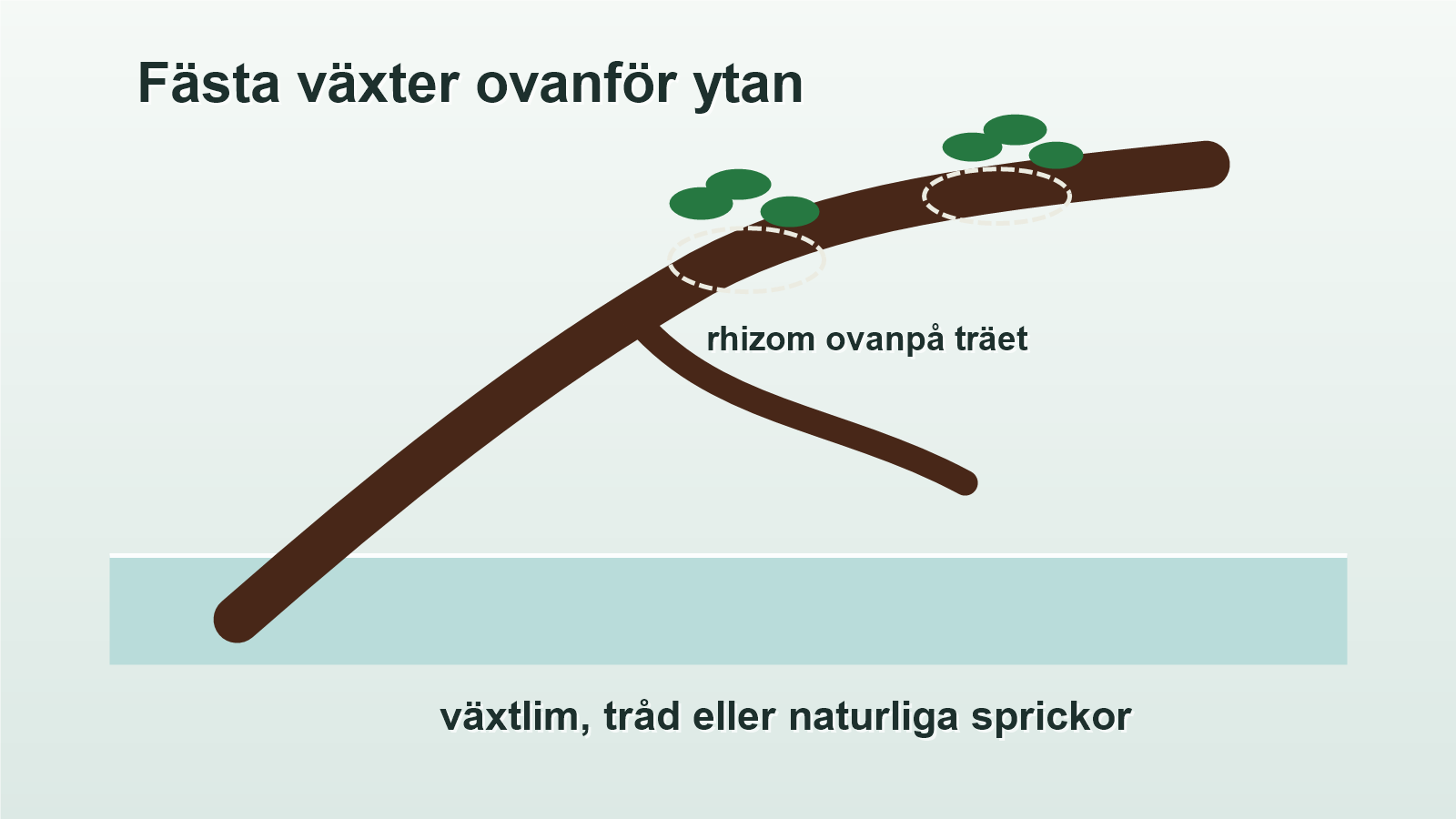
This can be done in several ways, depending on the plant and root shape.
The easiest is to use plants that like moist air and can grow firmly on the hardscape. For example, many people use mosses, small ferns, bucephalandra, anubias or other epiphytes near the waterline. Some plants work best partially above water, others like to have the roots near moisture but the leaves above.
Common ways of attaching plants to wood are:
- thin fishing line
- cotton thread
- plant glue for aquariums
- small cavities or cracks in the wood
- wedging rhizomes or roots gently between the natural structures of the root
If the plant sits above the water surface, it often needs high humidity in the beginning. In a fully open aquarium, some plants may dry out if the air is too dry. In this case, start with hardier plants, place them close to the water surface or shower them lightly during establishment.
The main thing is not to bury the rhizome of plants such as anubias and bucephalandra. They should be attached to the surface, not pushed down like ordinary stem plants.
Think about the waterline
The waterline becomes part of the design.
If the root only sticks up a little, it may look like a mistake. If it comes up clearly and has a nice transition between the underwater part and the surface part, it feels more deliberate.
Try to think of three zones:
- underwater: root base, fish environment, plants and rocks
- at the water surface: the transition, where the root breaks the surface
- above water: plants, branches, moss and form
When all three zones are connected, the scape becomes much stronger.
Stability is important
A root that protrudes above the surface must stand or lie stable.
If it is tall, crooked or heavy in one direction, it may need support. You can use rocks, substrate, aquarium-safe adhesive, concealing cable ties, or position the root so that it locks naturally against glass or other hardscape.
It is important to consider this before filling the aquarium completely. Test the placement dry or with a low water level first.
Tuskwood is often heavy and stable compared to many lighter roots, but the shape always determines how the root behaves in your particular aquarium.
Does it suit fish and prawns?
Yes, it can work very well.
For fish, roots that come up above the surface can provide shade, security and natural boundaries. For shrimps, roots and plants can provide more space to move around. In open aquariums, plants above the water surface can also provide a more sheltered feel.
But be aware that some fish may jump. If the aquarium is open, you need to choose your fish carefully and make sure the water level, plants and placement are safe.
It is also good to leave enough free swimming space under the roots. A dramatic root should not make the aquarium difficult for the fish to use.
When will it look best?
This type of design is usually best when the root has a clear role.
Either it is the main shape around which the whole scape is built, or it is a natural transition between the underwater part and the plants above.
It is rarely best to just take a root that is too big and let it stick up because it does not fit. The difference is in the intention.
A good surface root should feel like it is continuing out of the aquarium, not like it happened to be too high.
In short
Aquariums with roots that come up above the water surface can be very beautiful.
They work particularly well in shallow tank layouts, open aquariums, jungle feel, shoreline environments and modern aquascapes where you want the aquarium to feel bigger than the glass box itself.
The Tuskwood is a strong choice for this type of design because the roots often have natural, unique shapes. L-shaped and T-shaped roots can be particularly useful, as they can create a natural movement from the bottom, through the water surface and up into the air.
With the right root, stable placement and plants that can handle a humid environment above the surface, an aquarium can take on a completely different presence. It becomes not just a scape under water. It becomes a small environment that continues upwards.