
Bogwood is not just “wood that has been lying around for a long time”.
Real bogwood is wood that has been buried in oxygen-poor bog and peat moss environments for a very long time. This can be hundreds of years, and sometimes thousands of years. During that time, the wood changes slowly. It does not decompose in the same way as fresh wood, but it does not turn to stone either.
It is precisely the middle ground that makes bogwood so special.
It is still wood. But it's wood that has been preserved, darkened and saturated by its environment in a way that ordinary dried wood never has.
Where does bogwood come from?
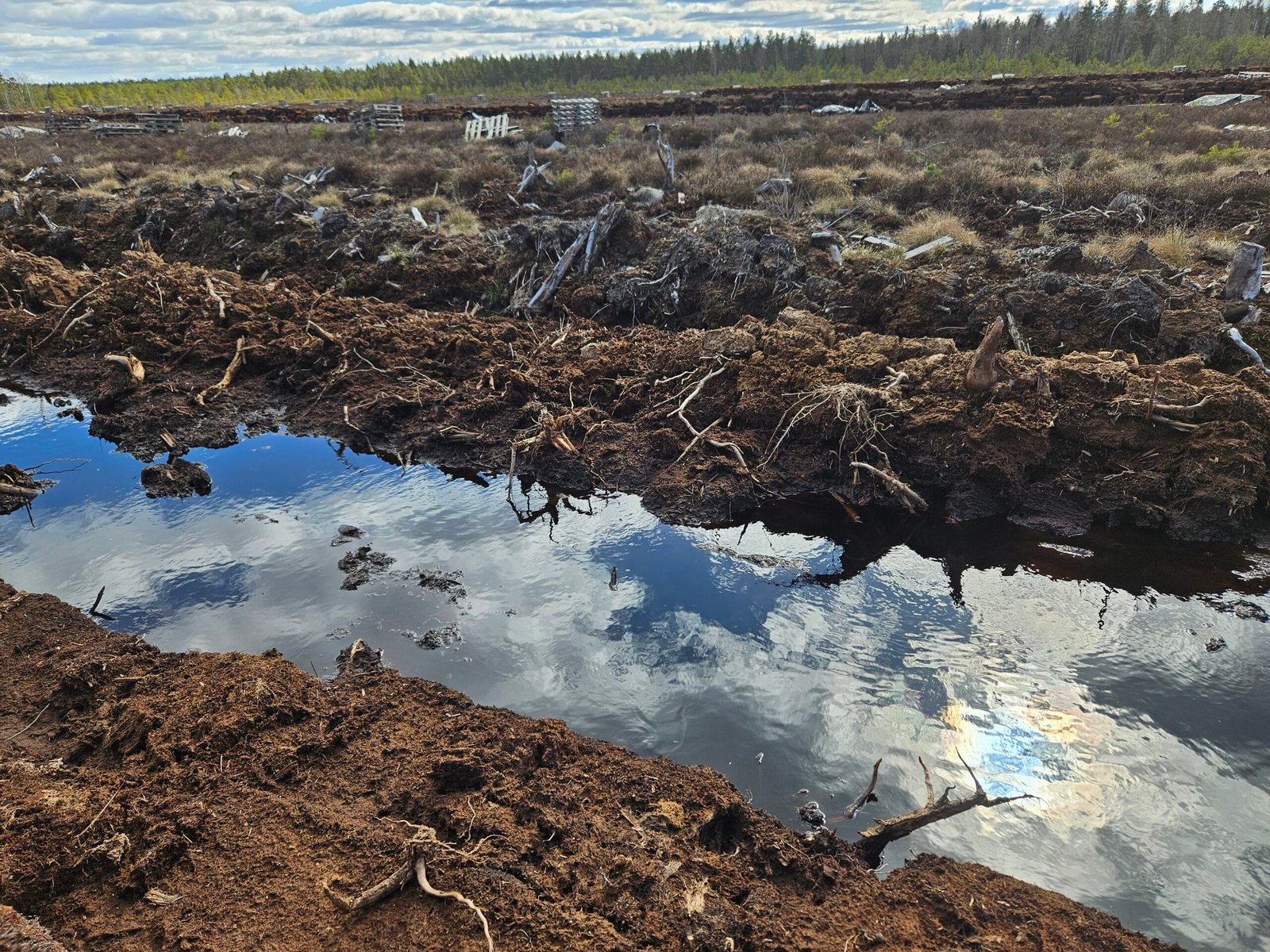
Bogwood comes from bogs and peatlands where wood has been buried under water, peat and organic matter.
When a tree falls in such an environment, it can quickly reach a state where oxygen availability is very low. Without oxygen, normal decomposition is slow. Fungi, bacteria and insects do not have the same opportunity to break down the wood as they would in normal forest soil.
At the same time, the wood is surrounded by acidic water, peat, humus and minerals. It is an environment where organic matter is preserved in a way that can be hard to imagine if you only think of ordinary wood.
That's why bogwood often has a history that feels much older than the aquarium hobby itself. It's not grown to look like a root. It's shaped by time, water, peat and lack of oxygen.
How is bogwood formed?
In simple terms, bogwood is formed in three stages.
First, the wood ends up in a bog or peat bog environment where it is covered by water, peat or other organic material.
Then the usual decomposition slows down. Oxygen is low, the pH is often acidic and biological activity is limited. The wood does not rot away in the same way as a branch lying in open woodland.
Finally, wood is slowly affected by substances in the environment. Humic substances, tannins, minerals and other natural compounds can penetrate the wood and change its colour, density, surface and feel.
This happens slowly. That's why real bogwood doesn't feel like freshly harvested or ordinary dried wood. The material has had time to become something else.
Is bogwood fossilised?
Here, words are easily confused.
Bogwood is sometimes referred to as partially fossilised, semi-fossil or sub-fossil wood. This is understandable, as the wood can be very old and clearly altered. But it is not fossilised in the same way as petrified wood.
Petrified wood has basically become stone by replacing organic material with minerals.
Bogwood has not become stone. It is still wood. The difference is that the wood has been preserved and transformed in an oxygen-poor, acidic and humus-rich environment for a very long time.
So when people say that bogwood is “partially fossilised”, they usually don't mean that the root is stone. It means that it is old, preserved and heavily altered compared to fresh wood.
This is an important difference for aquariums. A rock fossil root would not behave like wood. Real bogwood still does, but in a much more stable and mature way than fresher woods.
What does humus-impregnated mean?
Humus is a collective term for dark organic matter formed when plant material decomposes slowly.
In a peat or moss environment, there are many such substances. When wood is left there for a long time, it can be affected by humic substances, tannins and minerals from the water and peat. In layman's terms, the wood becomes humus-impregnated.
It does not mean that someone has treated the wood in a factory.
This means that the wood has spent a long time in a natural environment where substances from peat and water have penetrated the material. This helps explain why real bogwood often has a darker colour, deeper tone and a more mature feel than ordinary wood.
For Tuskwood, this feeling is central. Roots don't just have a shape. They also carry a material history.
The difference with fresh wood
Fresh wood contains more easily degradable substances.
Putting the wrong kind of fresh or poorly prepared wood in an aquarium can release organic matter, cause scaling, start to decompose faster or affect the water in a more disruptive way.
Real bogwood is different. It has already spent a very long time in an environment where the fast, easily soluble parts have largely changed, broken down or leached out. What remains is a more stable material.
That's why good bogwood can feel safer in aquariums than many fresher or more industrially prepared roots.
This does not mean that the wood is dead in a boring way. Quite the contrary. Real bogwood often has more character, deeper colour and more natural finish than wood that has just been dried, blasted or shaped for the aquarium trade.
Why does bogwood turn dark?
The dark colour does not come from paint or stain.
It is caused by the long time wood spends in peat and water environments. Humic substances, tannins and minerals affect the wood slowly. Depending on the species, environment, age and local conditions, the colour can be dark brown, almost black, reddish brown or mahogany-like.
Tuskwood often takes on a deep dark brown colour with hints of red when in an aquarium. Even lighter or sun-bleached areas tend to darken under water.
It's a different type of colour to many common aquarium roots. It feels more like the inside of the material than a surface on top.
Why is real bogwood interesting in aquariums?
For aquariums, real bogwood is interesting for several reasons.
It is stable. It has a natural, mature surface. It often has a high density and a heavier feel. It can give an aquarium an older, more believable environment right away.
In a scape, it makes a big difference.
An ordinary root can be decorative. A real bogwood root can make your aquarium feel like it has a history. It's not just the shape you see, but the knowledge that the material has been formed and preserved for a very long time.
It also means that no two roots are ever quite the same. Each root has grown under its own conditions, has been in its own place, has been influenced by its environment and has taken on its own shape.
Is everything sold as bogwood genuine?
Not necessarily.
In the aquarium trade, words are sometimes used quite widely. “Bogwood” can sometimes mean dark aquarium root, sometimes older wood, sometimes just a trade name.
For us, real bogwood is something more specific: wood that actually comes from the bog and peat bog environment where it has been preserved and modified over a long period of time.
That's why Tuskwood talks a lot about origin, natural surface, WYSIWYG and each individual root. If the root is unique and old, it should also be shown as that.
You can read more about how we display the exact root you buy in the article what does WYSIWYG mean when buying aquarium root?.
In short
Real bogwood is old wood that has been preserved in oxygen-poor, acidic and humus-rich bog or peat bog environments.
It is not fresh wood. It is not rock fossil either. It is wood that has been slowly transformed: darkened, stabilised and affected by humic substances, tannins and minerals.
That's why real bogwood feels different in aquariums. It has weight, colour, surface and history.
For Tuskwood, that is the point. The root is not just a decoration. It's a piece of ancient material that has survived long before it ends up in your aquarium.
Sources and further reading
The Wood Database has a short review of bog oak as wood that has been in an oxygen-poor peat environment and darkened by reactions between tannins and minerals: Bog Oak.
The Minnesota DNR describes bogs as oxygen-poor, acidic, and nutrient-poor environments with deep peat: Book.
A scientific article on bog oak describes the material as subfossil, meaning preserved but not petrified wood: Bog oak: Characteristics and characterisation.