







Can you boil aquarium roots before putting them in the aquarium?
Regular aquarium roots are sometimes boiled, but Tuskwood should preferably not be boiled. Instead, rinse, brush and soak.
Practical guides on aquarium roots, bogwood, wood species, care and hardscape selection.
Regular aquarium roots are sometimes boiled, but Tuskwood should preferably not be boiled. Instead, rinse, brush and soak.
Brown water from aquarium roots is usually due to tannins and humic substances. It is not automatically negative, but different types of wood behave differently.
Tuskwood always sinks, but the time depends on thickness. Thinner parts may sink after about two weeks, thicker roots may need longer.

Real bogwood is old wood preserved in a low-oxygen peat and humus environment. Here we explain how it is formed and how it differs from fresh or petrified wood.
The right root for Amazonian fish provides security, structure and a natural feel. Here we explain why Tuskwood is particularly suitable for discus, tetras and South American catfish.
How many fish an aquarium can hold depends on balance, adult size, behaviour and water values. Start reasonably, follow the aquarium and adjust if something is not working.
Slime and biofilm on new aquarium roots is common, especially on certain types of wood. Here we explain why it happens, when it's normal and why Tuskwood often behaves more calmly.
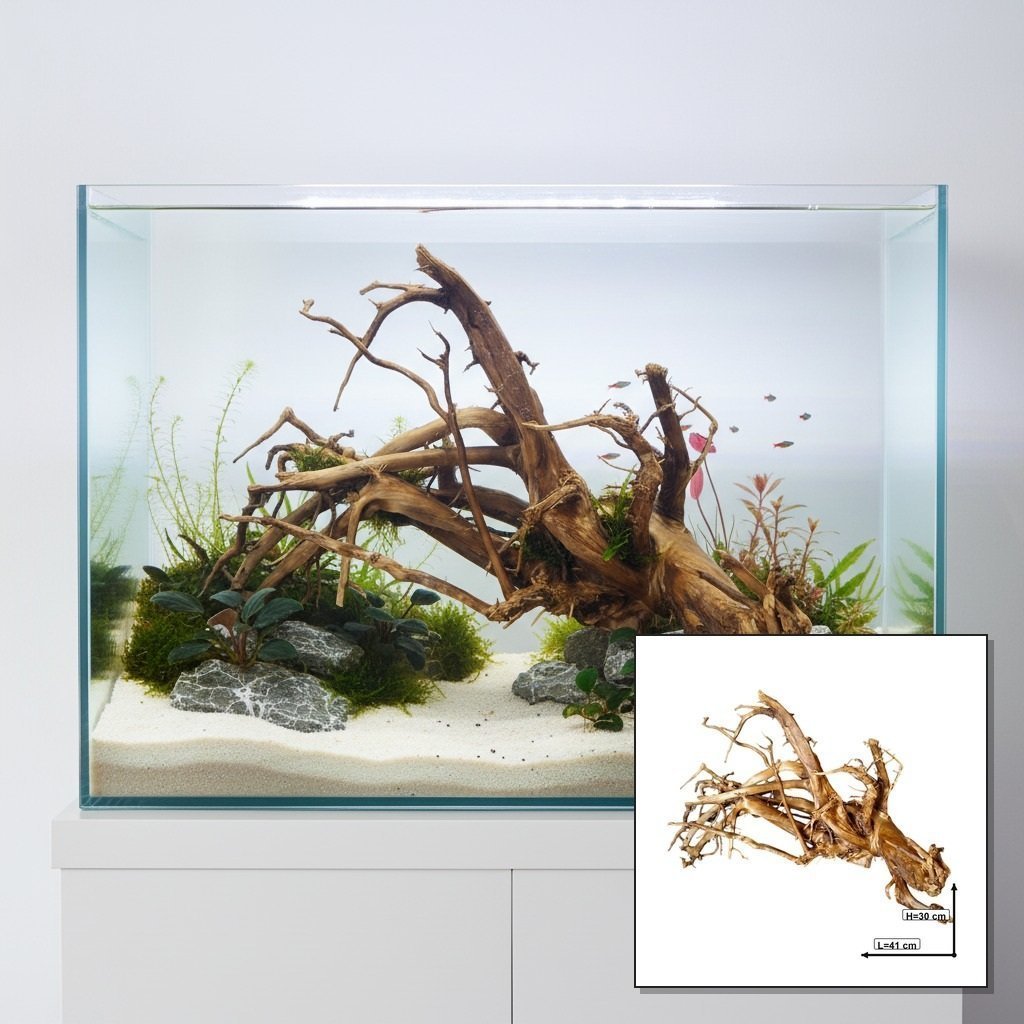
WYSIWYG means you buy exactly the root in the pictures. For unique aquarium roots, it's not a detail, but the basis for choosing the right shape for the right aquarium.
Spiderwood is easily accessible and has a familiar look. Tuskwood brings more design possibilities, natural finish, deeper colour and a sense of history to the aquarium.
